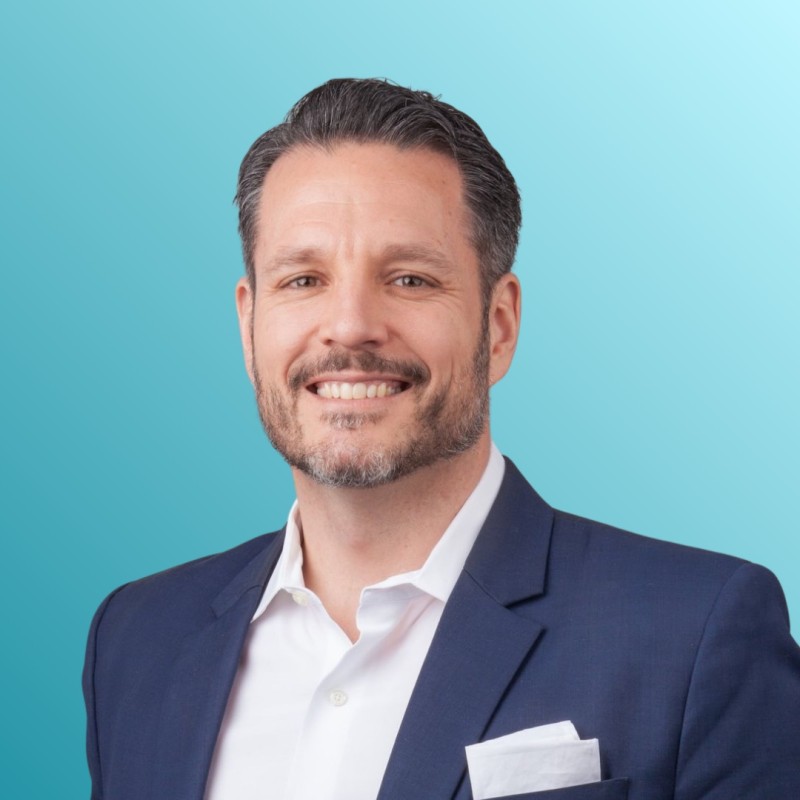
Interview with
Darren Clifford
Managing Partner, Adapt [us] Capital
In this conversation, Darren Clifford shares his vision for using capitalism as a force for climate adaptation, why quality-of-life improvements require physical interventions, and his conviction that credible sustainability must deliver real-world outcomes.
Can you tell us a bit about your role and the lens you bring to sustainability through your work?
After a decade at McKinsey, where I was part of its Green Business Building practice, I launched Adapt [us] to use capitalism as a force for adaptation; helping humanity adjust to a hotter, harsher world while improving quality of life. Adaptation isn't about managing risk or accepting defeat. It's an opportunity to improve the quality of life in a climate that's already changed. At Adapt [us], we invest in innovations that make adaptation both financially successful and accessible: better, faster, cheaper solutions that help more people and businesses function in this volatile world. Making adaptation scalable means making it profitable and practical, not aspirational.
From your perspective, how would you describe the current sustainability landscape in your industry?
Adaptation spent decades as a policy afterthought, something governments paid lip service to while funneling resources toward emissions. That's changed rapidly in the past two years. The LA fires, European heat waves, Southeast Asia floods: each event makes the gap between our infrastructure and our reality more obvious. Bloomberg and McKinsey both published major reports in 2025 showing adaptation isn't just necessary but represents a significant economic opportunity. The conversation has moved from whether we need it to how we build for it. The market is catching up to what was obvious years ago.
"Credibility gets measured by what functions when the temperature hits 45°C or the flood comes, not by what we say should happen."
— Darren Clifford
Where do you see the biggest disconnect right now between sustainability goals and real-world execution?
Net zero has dominated the conversation and capital allocation for years, but it's hard to see its connection to everyday life today. Someone installing flood barriers or passive cooling sees immediate value. Someone buying carbon credits sees a reporting line item. The problem isn't just a funding imbalance; it's a misdirected purpose. Quality-of-life improvements require physical interventions: better buildings, resilient infrastructure, and systems that work when heat or water threaten property and people.
What do you think will define "credible" sustainability in the next few years?
Credible sustainability will mean real-world outcomes. The opposite is greenwashing or aspirational goals that aren't in anyone's material interest, so nothing happens. What matters are products and systems with measurable physical impact: better building materials, improved water management, resilient infrastructure. Things that protect people and property and create value that people will actually pay for. When solutions align with self-interest, they scale. When they require sacrifice or wishful thinking, they stall. Credibility gets measured by what functions when the temperature hits 45°C or the flood comes, not by what we say should happen.
Interview conducted by Kinara
Explore More Insights
Discover more thought leadership on sustainability, ESG, and impact investing.
View All Articles